
What we are watching is something different: A fog manufactured and maintained by the people who started the war, so that the question of why it was started never has to be answered, observes Prem Panicker in his must read blog on the war in the Middle East.
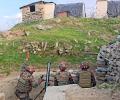
'With a military-led strategy to counter terrorism emanating from Pakistan, India has clearly signalled that it would respond decisively to future terrorist threats.'

'The next two to three weeks will not be decided in Washington.' 'They will be decided in Tehran, in whatever calculation Iran makes about the costs of continued resistance against the costs of appearing to have yielded.'

The delegations from the US and Iran head to Islamabad on Friday, carrying a ceasefire that is already fraying, a Strait that is technically open and practically closed, and a negotiating agenda that would challenge even parties actually negotiating in good faith, which these groups are not. Prem Panicker continues his must read blog on the Iran War.

A Pakistan minister refuted social media reports about the conclusion of the operation against Afghan Taliban, stating that the operation is continuing with full intensity.

Fight on toward goals that keep receding, or exit with most objectives unmet. Trump is agitated, his poll numbers falling below the Plimsoll line, his base fractured between those who back the war and those who remember that he campaigned on ending them.

Trump may strike. He may announce productive talks and extend again. He may do both at the same time. Iran will not open the Strait on someone else's terms, so no matter what happens, that problem will remain unsolved. And the IRGC will still be collecting its $2 million toll from every ship bold enough to ask permission to pass.

Both sides have now revealed a preference for escalation over strategic defeat, and each new provocation narrows the space for the next pause. The Touska seizure, Iran's refusal to negotiate under blockade, Israel's strikes on Iranian oil infrastructure -- all of these add up to an increasingly untenable situation. This makes the wild card -- Trump and his motormouth -- more consequential than ever, notes Prem Panicker in his must read blog on the Iran War.
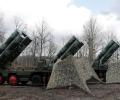
India successfully intercepted or neutralized all Pakistani missiles and drones that targeted 15 Indian cities on Wednesday night, according to official sources. The attack, which was launched in response to India's Operation Sindoor, involved the deployment of Barak-8 missiles, S-400 Triumph air defense systems, Akash surface-to-air missiles, and indigenously developed anti-drone equipment. India retaliated with precision strikes on Pakistani territory, destroying an HQ-9 air defense unit in Lahore and damaging key radar infrastructure. The incident highlights the strength of India's air defense capabilities and its ability to project power with surgical precision.
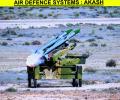
It marked a "milestone" in India's journey towards technological self-reliance in military operations, the ministry said on Operation Sindoor.

The 'rescue' operation occurred within kilometres of Iran's underground tunnel complex at Isfahan, assessed by the IAEA and US intelligence as holding a substantial portion of the country's 60 per cent enriched uranium stockpile. Retired senior US military officers have highlighted that the mission's footprint -- hundreds of special operators, multiple heavy-lift aircraft deep inside Iran -- appears outsized for recovering a single airman. Prem Panicker continues his must read blog on the Iran War.
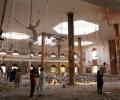
'Some success has been achieved in raising the costs of terrorism for Pakistan.'

Iran is fighting a different war: Older, slower, and in some ways more dangerous. Iran doesn't need to shoot down an F/A-18. It only needs to make the Strait of Hormuz feel dangerous long enough for insurance markets, shipping companies, and oil futures traders to do the rest. Prem Panicker continues his must-read daily blog on the war in the Middle East.

The LPG squeeze on India's restaurant sector is the quotidian face of a deeper crisis.

The foremost lesson for India today is to beef up its air defence to cater for multiple drone attacks. As seen in Operation Sindoor, we have come a long way, but there's room for getting better. We must develop a robust and almost impregnable air cover over ourselves, asserts IAF veteran Air Commodore Nitin Sathe (retd).

The question is no longer whether the war will expand. It has. The next few days will tell us whether the war stabilises around Hormuz or whether the Strait itself becomes the trigger for a far larger rupture. What to watch for over the next 48 hours is simple: Any move by the US toward direct naval control of the Strait; any credible Iranian attempt to disrupt or mine shipping lanes and, critically, whether energy infrastructure in the Gulf continues to be targeted.If those lines are crossed in tandem, the war will no longer be containable within the region.

Egypt, Pakistan, Saudi Arabia and Turkey met in Islamabad in what analysts say is the formal opening of a new diplomatic formation that could reshape the post-war regional order. Their immediate goal is a ceasefire; their larger ambition is to ensure that neither Iran nor Israel emerges from this war in a dominant position. Pakistan's foreign minister then flew directly to Beijing and mooted a Chinese role as guarantor of any eventual agreement. Prem Panicker continues his must read daily blog on the Gulf War.

Taking Kharg would give the US control over virtually all of Iran's oil exports and thus provide significant leverage, notes Prem Panicker in his must read daily blog on the Gulf War. It would also put American troops within range of Iran's remaining missiles, drones, and artillery on a piece of real estate that is just eight square miles in size, and just 15 miles from the Iranian mainland.

After his remarks at the White House. Trump, in his Truth Social pos,t warned that any retaliation from Iran would be met with "force far greater than what was witnessed tonight."

The Pakistan Army has accused India of attempting to manipulate history by creating fabricated narratives, following claims by the Indian Army regarding Pakistani casualties along the Line of Control.
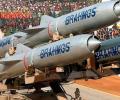
Army Chief Gen Upendra Dwivedi announced that India is considering raising a 'rocket-cum-missile' force in response to the evolving regional security situation and similar units in China and Pakistan. The move aims to enhance India's combat capabilities and long-range strike potential.

Chief of Defence Staff Gen Anil Chauhan asserted that the armed forces are free of nepotism and urged children to join to serve the nation. He also spoke about Operation Sindoor and the use of technology in warfare.

The United States, which entered this war in expectation of a short, sharp win along the Venezuela model, is now preparing for deeper involvement in a conflict it does not fully control, without the allies it typically relies on, against an adversary that is not behaving as expected, in a global environment that is already absorbing economic shock. Prem Panicker continues his must read daily blog on the Gulf War.

The Indian Army effectively repulsed multiple drone attacks and other munitions launched by Pakistan's armed forces along the western border on the intervening night of May 8-9. Pakistan also violated ceasefire along the Line of Control in Jammu and Kashmir. The Indian Army said it responded with force, asserting that all nefarious designs will be countered.

Heavy security has been deployed at vital installations in Delhi, including government buildings and areas with high footfalls, following Pakistan's drone attacks on Indian military sites. Police have strengthened vigil in areas with high footfalls and have canceled leaves for all Delhi Police personnel. The developments come after India swiftly thwarted Pakistan's attempts to strike military sites with drones and missiles.

Escalating its tensions with India, Pakistan on Thursday targeted Jammu with loitering munitions and the Indian air defence guns are firing back. A complete blackout has been enforced in Jammu city.
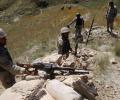
Pakistan responded to what it called 'unprovoked' attacks by Afghan forces in border areas, destroying several Afghan border posts, training camps, and terrorist hideouts, security sources said on Sunday.

Indian Army's Director General Military Operations Lt Gen Rajiv Ghai claims Pakistan lost over 100 military personnel along the Line of Control during Operation Sindoor and at least 12 aircraft during the conflict in May.
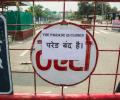
Pakistan's Foreign Minister Ishaq Dar has called for a 'composite dialogue' with India to address the contentious issues between the two sides.

Lieutenant General Vinod Khandare (retired), former principal adviser to the Ministry of Defence, discusses the implications of Operation Sindoor, including its impact on India's diplomatic relations and the need for improved civil defense.
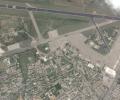
Pakistan's Prime Minister Shehbaz Sharif admitted that India's ballistic missiles hit Nur Khan Airbase and other sites on May 10, a rare acknowledgement that contradicts Pakistan's usual stance of denial when it comes to Indian military action.

The pause gives the US time to breathe, to regroup, to move its expeditionary force into position without risk of interception along the way. It gives Iran nothing -- on the ground, attacks against its infrastructure continue apace. Prem Panicker in his must read daily blog on the Gulf War.

Israel and the United States had a plan. Iran punched back. And now the Gulf is reeling, the world is beginning to feel the pain and, as on date, no one in Washington or Tel Aviv appears willing to admit that the punch has landed, notes Prem Panicker, continuing his must-read blog on the war in the Middle East.

The US drone strike that killed Ayman al-Zawahiri has raised questions over Pakistan's possible role in the raid amid reports suggesting that the country's airspace could have been used for carrying out the precision strike on the Al Qaeda chief's safe house in Kabul.

Pakistani drones were intercepted by Indian air defence in Jaisalmer. Explosions were heard and flashes seen in the sky.

China displayed a range of new weapons at a military parade, including laser weapons, nuclear ballistic missiles, giant underwater drones, and fifth-generation aircraft.
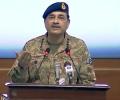
Munir said that the entire nation stands in resolute solidarity with every member of its Armed Forces.

Pakistan on Thursday said that the country's air force struck terrorist hideouts in Iran's Siestan-Balochistan province, a day after Islamabad recalled its ambassador from Tehran in the wake of Iranian missile and drone strikes in Balochistan.
In 2025, India launched Operation Sindoor, a multi-domain combat mission against Pakistan in response to cross-border terrorism. The operation involved precision strikes, military retaliation, and diplomatic measures, marking a significant shift in India's security policy.

Pakistan military spokesperson Lieutenant General Ahmad Sharif Chaudhry told a hurriedly called press conference in Islamabad at around 4 am that th Pakistan air force's Nur Khan (Chaklala, Rawalpindi), Murid (Chakwal) and Rafiqui (Shorkot in Jhang district) airbases were targeted.
